


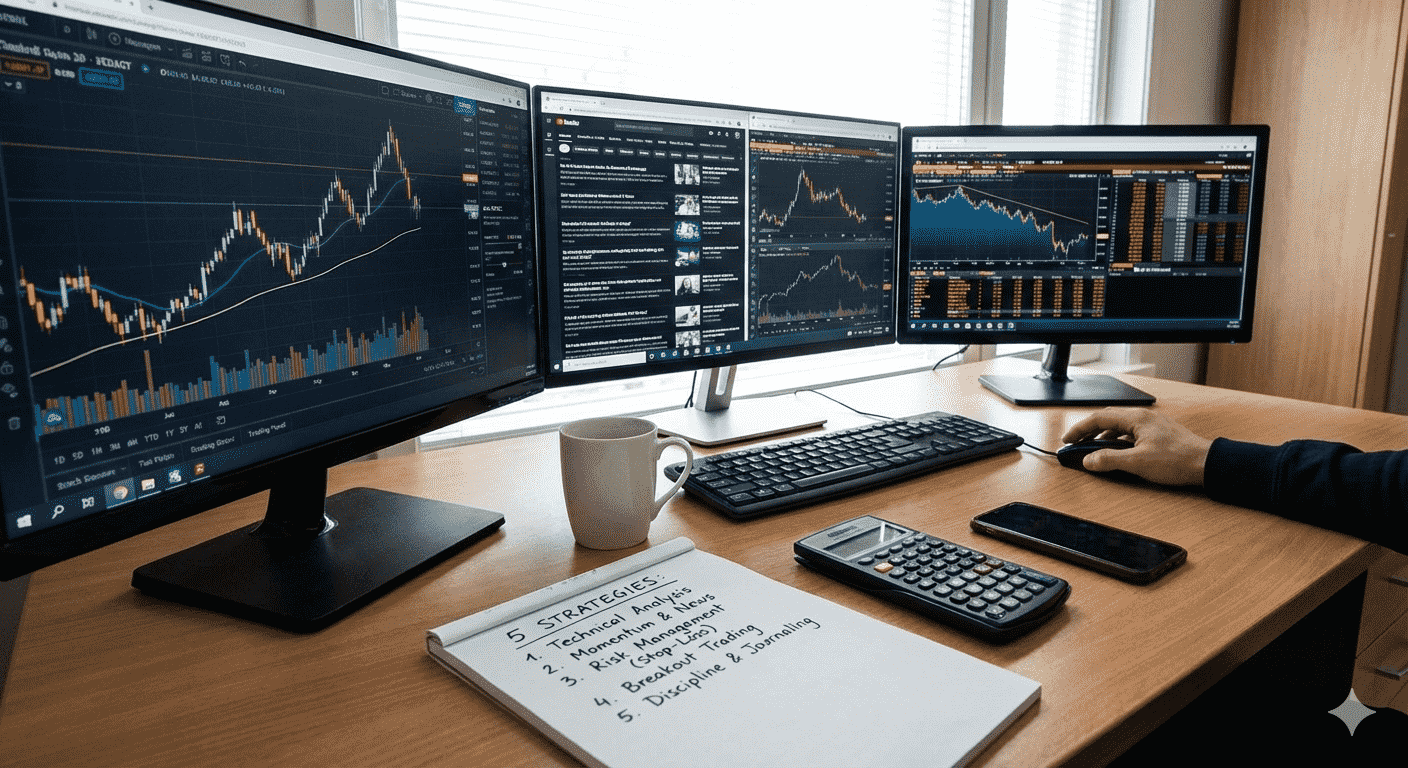
There is a common belief that intraday trading is about speed. Fast charts. Fast clicks. Fast profits. In reality, many traders who explore the best day trading strategies end up focusing less on speed and more on control. As the market moves whether you are ready or not. The question is whether you are prepared before it does.
When not trading becomes a strategy
Strangely, one of the strongest habits inside many so called best day strategies is selective inactivity.
Not every session offers clean setups.
During choppy movement or unclear direction, disciplined traders may:
- Reduce position size
- Wait longer for confirmation
- Skip trading entirely
- Focus only on one instrument
This restraint feels uncomfortable at first. But over time, it protects capital.
And protecting capital keeps you in the game.
Entry clarity reduces emotional noise
Impulsive entries create unstable results.
Structured traders usually define:
- Exact trigger condition
- Stop loss placement
- Target level
- Risk to reward ratio
If these are not clear, the trade is skipped.
It sounds strict. It should be.
Because once a position is open, emotions increase naturally. Predefined rules reduce that emotional influence.
Volume and momentum confirmation
Price movement alone can mislead.
Intraday traders often look for confirmation such as:
- Rising volume during breakout
- Multiple rejections at a support zone
- Strong momentum candles with follow through
Confirmation does not guarantee success. It simply improves probability slightly.
And trading is often about small probability edges repeated over time.
Overtrading slowly erodes progress
One habit that damages many intraday accounts is overtrading.
It usually starts subtly:
- Taking trades without full setup
- Increasing position size after a loss
- Trading out of boredom late in session
At first, it feels harmless. Then results begin to slip.
Limiting the number of trades per day is a practical safeguard. Some traders allow three trades. Some allow five. The number is less important than the discipline behind it.
Reviewing the day honestly
After the session ends, reflection matters more than celebration.
Many traders record:
- Entry reasoning
- Exit reasoning
- Emotional state
- Mistakes made
Patterns become visible only through repetition.
And sometimes the mistake is not technical. It is psychological. Charts can be clean. Indicators can line up perfectly. The setup can look almost textbook. Yet one small emotional reaction shifts everything. A trader hesitates for a second too long. Or exits too early. Or worse, jumps back in out of frustration. The numbers did not fail. The mind did.
When traders talk about the best day trading strategies, they are often describing structured habits rather than secret indicators. It sounds less exciting, honestly. People want a formula. A hidden tool. Something others do not know. But most consistent intraday traders repeat the same basic disciplines every day. Clear risk limits. Selective participation. Defined entry rules. Honest review.
Clear risk limits mean knowing exactly how much is acceptable to lose before entering a trade. Not deciding during the trade. Before it. That small difference changes behavior. When risk is defined in advance, fear becomes smaller. Not gone. Just manageable.
Selective participation matters more than people admit. Not every market move deserves attention.
Then comes the part many skip. Honest review. Looking at trades without defending them. Asking why a rule was broken. Not to criticize, just to understand. Patterns show up there. Emotional ones.
There will always be unpredictable days. Sudden news. Sharp reversals. Momentum that fades without warning. That part cannot be eliminated. But structure reduces chaos. It creates boundaries inside uncertainty. And in fast markets, reducing chaos may be more valuable than chasing speed. Speed feels powerful. Structure keeps you stable.
