


Numerical analysis involves identifying relationships between values, examining recurring intervals, and organizing information into patterns that can be interpreted systematically. One method used in mathematics is the multiples method, which explores numbers generated by multiplying a fixed value by successive integers. This approach provides a practical framework for classifying numerical data, comparing sequences, and understanding the structure of arithmetic relationships.
Although multiples are easy to calculate, interpreting them correctly requires attention to context. Mathematical patterns can explain how numbers relate to one another, but they do not automatically reveal what will happen in an independent process. A systematic approach therefore combines accurate calculations with careful interpretation of the available information.
Understanding the Basic Principle of Multiples
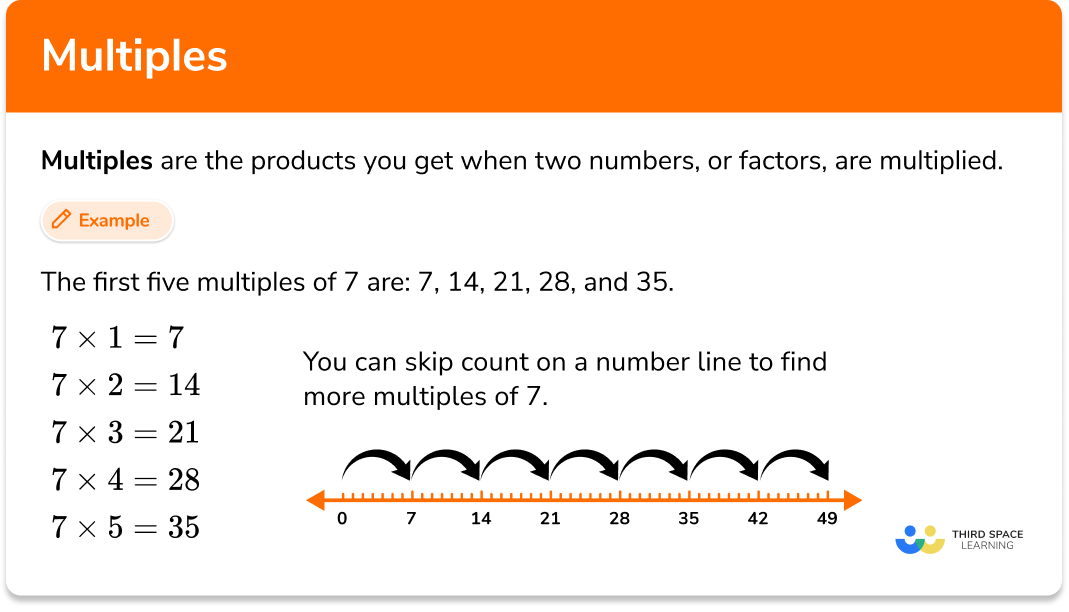
A multiple is a number obtained by multiplying a given integer by another integer. For example, the multiples of four include 4, 8, 12, 16, 20, and 24. Each value belongs to the same sequence because it can be divided evenly by four.
The general formula is: [M=b\times k]
Here, (M) represents the resulting multiple, (b) is the base number, and (k) is an integer multiplier. By changing the multiplier while keeping the base constant, a consistent numerical sequence can be generated.
Consider the base number seven. Multiplying it by integers from one to six produces 7, 14, 21, 28, 35, and 42. The difference between consecutive values remains seven, demonstrating the regular structure of the sequence.
Understanding this principle is the first step toward using multiples effectively. It establishes a mathematical foundation that can be applied to numerical classification, sequence comparisons, and elementary statistical exercises.
Establishing a Structured Calculation Method
A reliable analysis begins with a clearly defined objective. Before calculating multiples, it is useful to determine which values will be examined, what base number will be used, and how the resulting sequence will be recorded.
The first stage involves selecting a base number appropriate to the analysis. The second stage establishes a multiplier range. The third stage calculates the resulting values and organizes them into a table or spreadsheet. Finally, the sequence can be compared with a separate dataset to identify shared characteristics.
For example, selecting six as the base number and using multipliers from one to ten produces values ranging from 6 to 60. An analyst examining a dataset within that range can identify which observations are divisible by six without leaving a remainder.
This procedure creates a consistent classification system. It also makes calculations easier to verify because every result follows the same formula. If the base number or multiplier range changes, the revised sequence can be generated using the same steps.
Comparing Intervals and Shared Values
Multiples can reveal useful relationships between different numerical sequences. When two sequences use different base numbers, their values may occasionally overlap. These shared values are called common multiples.
For example, the multiples of four include 4, 8, 12, 16, 20, and 24, while the multiples of six include 6, 12, 18, and 24. Both sequences contain 12 and 24 because these values are divisible by both four and six.
The smallest positive common multiple of two integers is known as their least common multiple. In this example, the least common multiple of four and six is 12. This concept helps explain how numerical groups intersect and provides a foundation for more advanced calculations.
Comparing sequences can also clarify the difference between a genuine mathematical relationship and a pattern that appears meaningful only because of a limited sample. A valid common multiple can be demonstrated through division, whereas an apparent trend in a dataset requires further examination before any broader interpretation is justified.
Evaluating Numerical Records Objectively
Historical records can be organized according to multiples to examine the distribution of observed values. For example, a dataset can be divided into groups based on whether its entries are divisible by two, three, five, or another selected integer.
When reviewing records associated with Macau Pools, the same classification process can be used to describe the numerical properties of previously recorded results. A spreadsheet can calculate frequencies, identify shared divisors, and summarize how often particular categories occur within a defined observation period.
These measurements describe the available records rather than establish a dependable prediction of future results. If observations are generated independently, previous appearances do not necessarily influence subsequent outcomes. A category occurring frequently in one sample may appear less frequently in another, even when the underlying process remains unchanged.
For this reason, useful documentation should specify the observation period, sample size, source of the records, and rules used to classify the values. These details allow readers to understand precisely what the calculations demonstrate.
Improving Accuracy Through Documentation
Organized documentation makes numerical analysis more transparent and reproducible. A spreadsheet can contain separate columns for the base number, multiplier, calculated multiple, and classification result. Automated formulas can generate sequences while reducing the risk of arithmetic and transcription errors.
For example, a formula that multiplies a fixed base by a changing integer can generate an entire sequence without requiring each value to be entered manually. The resulting data can then be sorted, filtered, or compared with another dataset.
Analytical work involving Alexistogel should distinguish clearly between mathematical calculations, descriptive observations, and claims about uncertain outcomes. Each category requires a different standard of interpretation, and numerical evidence should not be presented as proof when the relationship has not been established.
Checking calculations independently is another important practice. A result can be verified by dividing the multiple by its proposed base number and confirming that the quotient is an integer. This simple test provides a direct way to detect classification mistakes.
Applying Multiples Within Defined Analytical Limits
The usefulness of the multiples method depends on the question being investigated. It is effective for identifying divisibility, organizing numerical groups, comparing arithmetic sequences, and calculating common multiples. It can also support introductory statistical exercises by providing consistent categories for examining datasets.
However, the existence of a mathematical sequence does not establish that an unrelated event follows the same structure. A deterministic sequence is produced by a fixed rule, while uncertain outcomes may depend on a separate mechanism that must be evaluated independently.
A careful analytical process therefore begins with a defined question, uses consistent calculation rules, records the evidence, and avoids conclusions that extend beyond the available data. These practices make numerical comparisons easier to reproduce and help separate mathematical facts from interpretations that lack sufficient support.
